Virtual Reality
A New Frontier in Immersive Experiences
Introduction
Virtual Reality (VR) is transforming how we experience the digital world. Unlike AR, which overlays virtual elements onto the real world, VR immerses users into entirely virtual environments. From gaming and education to healthcare and real estate, VR is redefining how we interact, learn, and engage.
How VR Technology Works
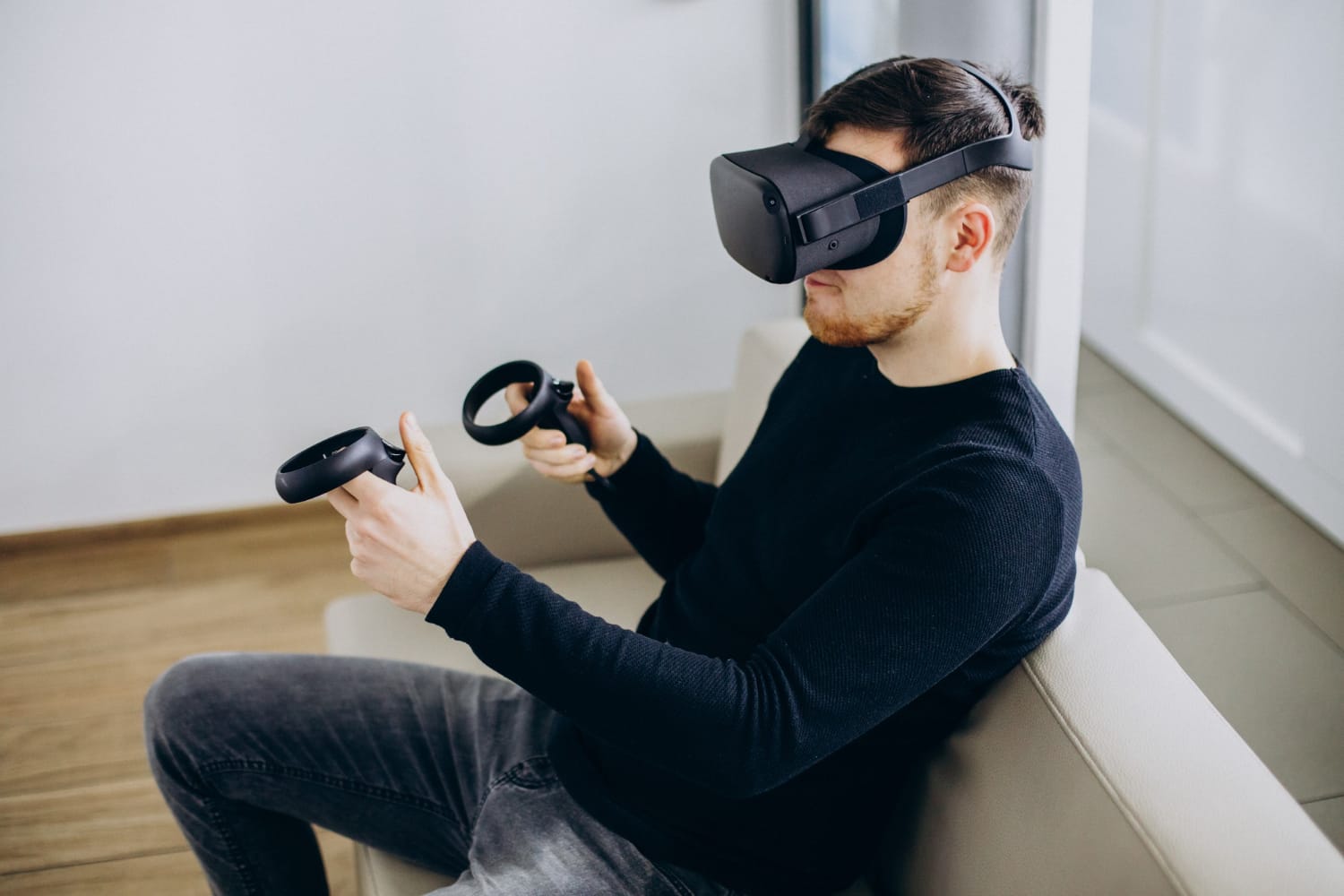
VR uses a combination of hardware and software to create fully immersive experiences. The key components include:
1. Headsets: Devices like the Oculus Quest and HTC Vive provide a stereoscopic view of the virtual world.
2. Motion Tracking: Sensors track the user’s head and hand movements, allowing interaction with the virtual environment.
3. Haptic Feedback: Gloves and suits enhance immersion by simulating touch and other sensations.
4. VR Software: The backbone of VR, software designs and manages the virtual spaces users explore.
Real-World Applications of VR
1. Gaming and Entertainment
VR has redefined gaming by offering immersive experiences that go beyond traditional screens. Players can physically move, interact, and experience virtual worlds. VR is also gaining traction in virtual concerts, cinematic experiences, and theme parks.
2. Healthcare
In healthcare, VR is being used for pain management, therapy, and rehabilitation. Patients can immerse themselves in calming environments during procedures, and therapists use VR scenarios to treat PTSD and anxiety.
3. Education and Training
VR provides realistic simulations for educational purposes, from dissecting virtual bodies to exploring historical landmarks. It’s also invaluable in industries like aviation and construction, where real-world training can be costly or dangerous.
4. Real Estate and Architecture
VR allows buyers to tour properties remotely, enabling them to explore spaces before construction is complete. Architects use VR to visualize and refine designs, offering clients a better understanding of their projects.
Challenges and the Future of VR
Barriers to widespread adoption include the cost of VR equipment, potential motion sickness, and the need for more accessible content. However, advancements in 5G, hardware, and software are making VR more accessible. Future applications could include virtual tourism, advanced remote collaboration, and fully immersive social platforms.
Conclusion
Virtual Reality is not just a tool for entertainment; it’s a transformative technology impacting multiple industries. As VR becomes more affordable and accessible, its potential to revolutionize the way we work, play, and connect is limitless.